

Clean carpets do more than look good — they help keep your home healthy. With several proven cleaning methods available, homeowners can pick the approach that fits their carpet type, schedule, and environmental preferences. This guide walks through the best carpet-cleaning techniques, how well they work, their main benefits, and why eco-friendly options matter. Whether you’re fighting set-in stains, lingering odors, or trapped allergens, knowing the right steps will help you keep your indoor air and living spaces fresher. We’ll cover effective methods, safe green cleaners, when to call professionals, and practical stain- and odor-removal tips.
Which Carpet Cleaning Methods Work Best for Home Use?
For home carpets, a few methods consistently deliver great results: hot water extraction, dry cleaning, and carpet shampooing. Each has clear strengths and trade-offs, so the right choice depends on how your carpet is constructed, how soiled it is, and how quickly you need it dry.
How Hot Water Extraction (Steam Cleaning) Reaches Deep Dirt
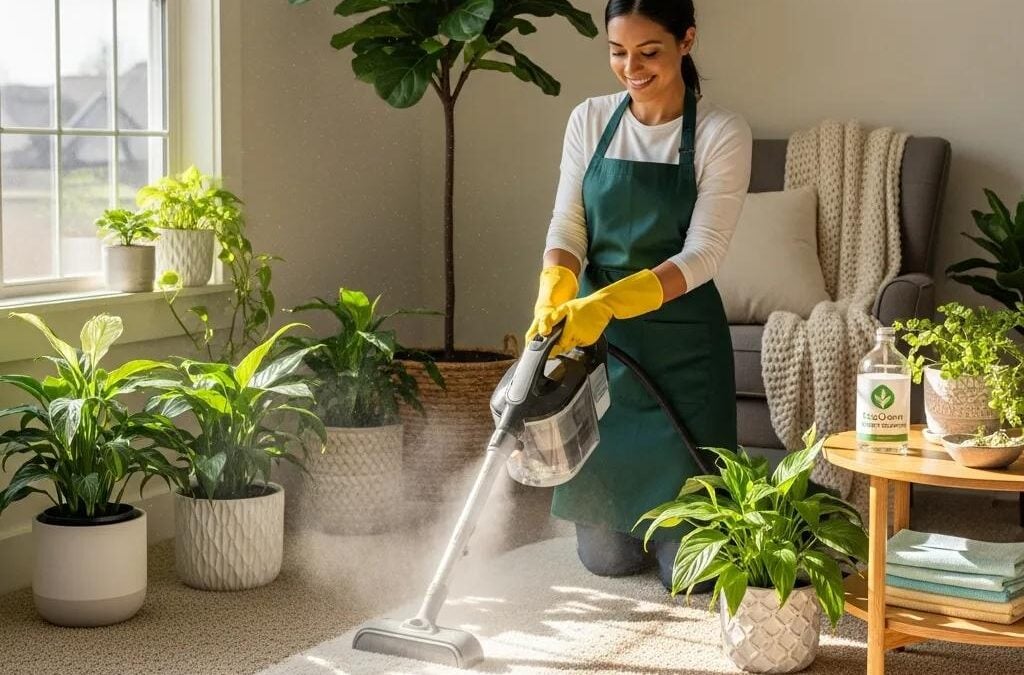
Hot water extraction — often called steam cleaning — uses pressurized hot water and cleaning solution injected into the pile, then powerful suction pulls out soil, allergens, and residues. The heat loosens stubborn grime and helps remove deep-seated dirt that regular vacuuming can’t reach. It’s a top pick for durable, moisture-tolerant carpets and, when done regularly, helps preserve appearance and lifespan.
Why Dry Carpet Cleaning Is a Good Option for Sensitive Carpets
Dry cleaning uses a powder or dry compound that binds soil and is vacuumed away, so the carpet dries quickly and risk of mold is minimal. It’s ideal for delicate fibers or situations where moisture is a concern. While dry methods are fast and convenient, they’re generally less effective at removing deeply embedded grime than hot water extraction.
How Do Eco-Friendly Carpet Cleaners Help Home Health?
Eco-friendly cleaners use plant-based or natural ingredients that reduce chemical exposure in your home. Choosing greener products can lower airborne irritants and minimize harsh residues left in carpet fibers — a real benefit for households with kids, pets, or allergy sufferers.
Which Eco-Friendly Products Are Safe Around Kids and Pets?
Look for non-toxic, biodegradable cleaners and plant-based formulas. Simple options like diluted white vinegar, baking soda, or certified eco carpet cleaners remove odors and lift many stains without harsh fumes. They’re gentle around children and pets when used as directed, but always follow label instructions and spot-test first.
How Professional Cleaning Improves Indoor Air Quality
Professional services bring industrial-strength equipment and trained technicians who can remove deep allergens, dust mites, and trapped pollutants more effectively than most consumer machines. Regular pro cleaning reduces airborne allergen levels and helps maintain a healthier indoor environment.
When Is Professional Carpet Cleaning Better Than DIY?
DIY cleaning is fine for routine maintenance or small spills, but professionals are the right call for heavy soiling, stubborn stains, or when you need a thorough, long-lasting clean. Pros have tools, training, and products that usually outperform consumer options.
What DIY Limitations Should You Watch For?
Home machines and improvised methods can fall short on deep stains, and improper use can leave soapy residues that attract dirt faster. Without the right technique, you also risk over-wetting and potential fiber damage. Know when a stain needs specialist attention.
What Guarantees and Benefits Do Professional Services Provide?
Companies like Elevate Flood Restoration and Carpet Cleaning offer trained techs, high-quality equipment, and satisfaction guarantees to give you confidence in the result. Their teams remove deep stains and odors and often use eco-friendly options to keep your home safe for family and pets. See their full carpet-cleaning service here: professional carpet cleaning services.
How Can You Remove Stains and Odors Effectively at Home?
Quick action and the right products are key. Treat spills promptly to prevent them from setting, and use recommended techniques for the specific type of stain or odor.
Best Steps for Pet Stain and Odor Removal
Enzymatic cleaners are the go-to for pet stains because they break down the proteins that cause odor. Blot up excess moisture, apply the enzyme solution, let it work per the label, then blot and allow the area to dry. Repeat if needed until the smell and stain are gone.
How to Treat Everyday Stains Like Coffee or Wine
Many common spills respond well to a mild vinegar-and-water mix or a diluted dish soap solution. Blot — don’t rub — from the outside in, rinse with clean water, and blot dry. Always test any cleaner in an unseen spot first to make sure it won’t affect color or fiber.
| Method | Benefits | Suitability |
|---|---|---|
| Hot Water Extraction | Deep cleaning and effective stain removal | Best for heavily soiled carpets and those that tolerate moisture |
| Dry Cleaning | Fast drying with minimal moisture | Ideal for delicate carpets or water-sensitive materials |
| Carpet Shampooing | Good surface cleaning and freshening | Suitable for routine maintenance and light soiling |
This quick comparison shows which methods work where so you can pick the best option for your carpet’s needs.
Frequently Asked Questions
What should I consider when choosing a carpet cleaning method?
Think about your carpet’s fiber type, how dirty it is, and any specific stains or odors. Delicate fibers often need low-moisture approaches, while heavily soiled areas usually benefit from hot water extraction. Also factor in drying time and indoor air concerns, and always test a small area first.
How often should I clean my carpets?
For most homes, a deep clean every 6–12 months is a good rule. Homes with heavy traffic, kids, or pets may need cleaning every 3–6 months. Between deep cleans, vacuuming and prompt spot treatment help keep carpets looking and smelling fresh.
Can I use homemade solutions for carpet cleaning?
Yes — vinegar, baking soda, and mild dish soap can work well for spot cleaning and odor control. They’re cost-effective and eco-friendlier than many chemical alternatives. Still, they’re best for light jobs and not always a substitute for professional deep cleaning.
What are the signs that my carpet needs professional cleaning?
Call the pros if you have persistent odors, stains that won’t lift, a generally dingy look despite regular vacuuming, or worsening allergy symptoms at home. Professional cleaning can refresh fibers and remove trapped allergens that household methods miss.
Are there any eco-friendly carpet cleaning methods I can do at home?
Yes. Try baking soda to absorb odors, a vinegar-and-water rinse for light stains, or steam cleaning with little to no detergent. These options reduce chemical use and can be effective when matched to the right problem and carpet type.
What should I do if my carpet gets wet after cleaning?
Speed matters. Increase airflow with fans and use dehumidifiers where possible to dry carpets quickly and prevent mold. Avoid walking on damp areas and consider professional drying services if moisture persists.
Conclusion
Choosing the right carpet-cleaning method helps your carpets last longer and keeps your home healthier. Pair routine care with eco-friendly products when possible, and call a trusted pro for tough jobs or deep cleaning. Follow these practices to keep your living spaces fresh — and if you want expert help, Elevate is here to assist.